 My profile of photographer Ed Feingersh is also featured on the Immortal Marilyn website
Four Days in New York: Ed Feingersh and Marilyn
1955 was a year of change for Marilyn Monroe. After leaving Hollywood for New York, and abandoning her contract with Twentieth Century Fox, Marilyn was no longer ‘just a dumb blonde’, but a true renegade. In January, Marilyn formed a production company with photographer Milton Greene, and moved into a suite at the Ambassador Hotel.
Despite frenzied speculation, Marilyn largely evaded publicity. Dressed down in casual clothes and no make-up, she wandered the city unnoticed, and learned about ‘the Method’, a deeper, more challenging approach to drama, with Lee Strasberg at the Actor’s Studio. And Marilyn also began the long, difficult journey of psychoanalysis at this time.
By March of 1955, however, both Greene and Marilyn agreed that her image needed a boost. Her wish to prove herself a ‘serious actress’ had been roundly mocked by the press, many of whom predicted that the erstwhile sex goddess was destroying her own career.
In his introduction to the 1990 book, Marilyn Fifty-Five, Bob LaBrasca stated that it was Milton Greene who arranged for a cover spread in Redbook. But Robert Stein, magazine editor at the time, has claimed that it was another of Marilyn’s photographers, Sam Shaw, who arranged the initial contact, and one of Shaw’s portraits of Marilyn graces the resulting July 1955 cover story, ‘The Marilyn Monroe You’ve Never Seen’.
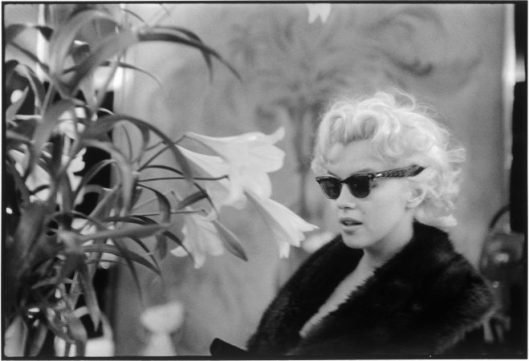
However, neither Shaw nor Greene worked on the story directly. Over a hectic week, photojournalist Ed Feingersh followed Marilyn, along with Stein, and Marilyn’s small coterie of business associates. Whether shopping, dining, or dressing up, Marilyn’s daily life was captured on film.
In a 2005 article for American Heritage, ‘Do You Want to See Her?’, Stein recalled that “the two Marilyns kept fading in and out’: in other words, the star charisma she could switch on at will, and the nervous, sensitive woman that lay just behind that mask.
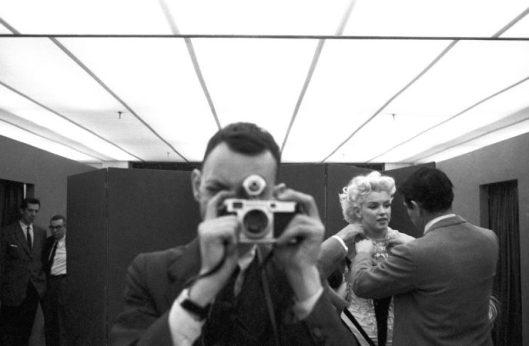 According to Stein, Feingersh was also a rather unpredictable character. “He lived in the now, letting moments take him wherever they would … He must have had an apartment or room somewhere, but in all our years as close friends, I never saw it … His energy was unending … Life with him was never at a standstill.”
Unlike the glamour and cheesecake photographers Marilyn had posed for in Hollywood, Feingersh was not interested in creating illusions. Inspired by Henri Cartier-Bresson, Feingersh refused to allow his pictures to be cropped. His grainy, monochrome shots of Marilyn were among the most realistic ever taken, yet his subject remained beautiful.
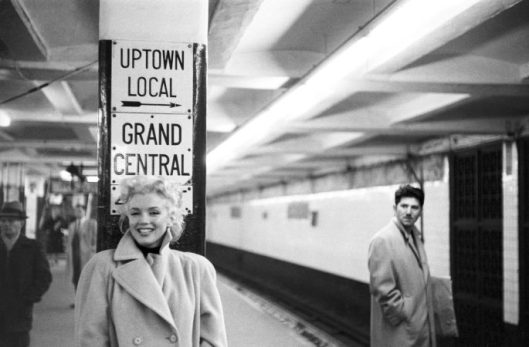
Some of the photos were more contrived than others: for example, the famous series depicting Marilyn on the New York subway. She never used public transport, for fear of being mobbed. Nonetheless, as Bob LaBrasca remarked, Marilyn had “an unaristocratic air and seemed almost at home among the straphangers.”
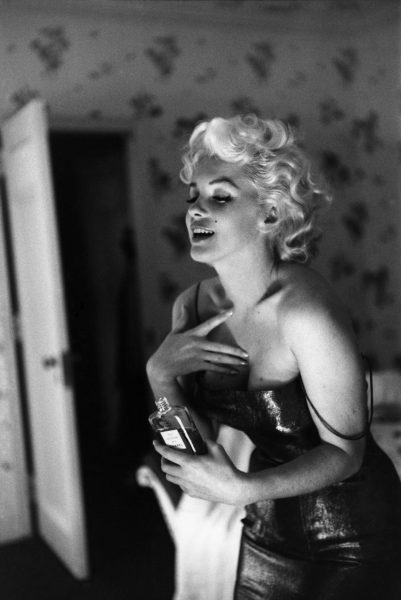
 For Marilyn, being photographed wasn’t an inconvenience, as it had become a way of life. Back in her hotel room, dressed for the opening night of Cat on a Hot Tin Roof, she “put on a performance” for Feingersh, splashing Chanel No. 5 on herself.
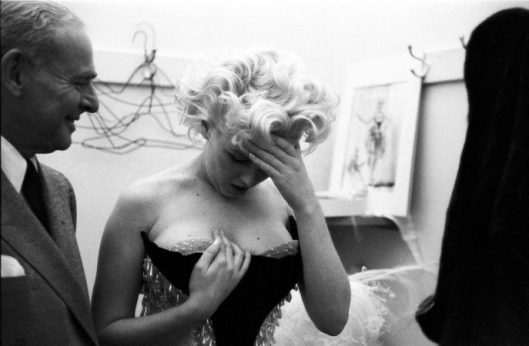
 At other times, however, the strain of ‘being Marilyn’ was overwhelming. At a costume fitting for her guest appearance at a circus, Marilyn “burst into tears of frustration,” Robert Stein recalled. “Eddie’s camera got it all, showing her rising tension against a visual jangle of wire hangers in the background.”
 As the assignment progressed, Stein began to notice many similarities between Feingersh and Monroe…
They both were somehow more directly connected to life than the rest of us, and more vulnerable. Like Marilyn, Eddie was given to self-parody to mask the pain of being defenceless against daily living and, like her, desperate to make full use of the gifts such an open nature provides.
‘Just as Marilyn dreaded looking less than perfect in front of the cameras and was always late, so Eddie obsessed over what he did behind the camera and would let no one else develop or print his pictures.
‘Each held on to an ideal of Art as if it were life itself, and, as it turned out for both of them, it was. Marilyn’s movies and Eddie’s pictures made those who saw them feel more alive but at the same time fear for their safety, sensing the price that would have to be paid for their luminous openness.
Marilyn never worked with Feingersh again. He married, unhappily, and struggled with alcoholism and depression. “He cut down on his drinking,” Stein acknowledged, “but the depression got worse. Gradually he came into the office less and less and finally not at all. Then came a phonecall from a woman who had been in love with him for years. He had arrived at her door the evening before and died in his sleep during the night.”
Feingersh’s lonely demise [in 1961] has poignant echoes with Marilyn’s own tragic fate. “Over the years I had urged Eddie to try a psychiatrist,” Stein continued, “but my pleading could not break through his certainty that suffering was inseparable from his gift, that he could not escape one without losing the other. In today’s world he—and Marilyn, for that matter —might have been kept going by medication, but back then there was no such lifeline.”
“Ever since, those who loved Eddie’s work have tried to get museums to give him the recognition he deserves,” Stein concluded. “But it has been no easier to help him in death than it was during his life. Almost all his prints and negatives, so closely held, scattered and disappeared, magnificent pictures lost forever.”
However, Feingersh’s pictures of Marilyn were found in a New York warehouse in 1987, and purchased by archivist Michael Ochs as part of a larger lot of unexamined materials. A book, Marilyn Fifty-Five, was published (updated as Marilyn in New York in 2008), and the Feingersh sessions have since been the subject of many exhibitions. They are now among the most popular images of Marilyn, revealing to each viewer her natural beauty, and the unique artistry of Ed Feingersh.




 Tara Hanks
You must be logged in to post a comment.