‘Everyone has a novel inside them’, it is often said – but most of these novels will never be finished. Charlotte Brontё’s late fragment, Emma Brown, inspired the final novel by Clare Boylan in 2004, while the manuscript of Jane Austen’s The Watsons was recently sold at auction for nearly £1 million.
Posthumous publication is nothing new – collections of essays and short stories by Virginia Woolf were unseen until after her suicide in 1941 – but nonetheless, this prolific sub-genre raises questions about the creative process, and its ownership.
The Russian novelist, Fyodor Dostoyevsky, began his first full-length novel, Netochka Nezvanova, in 1846. Three years later, when the first section of Netochka Nezvanova was serialised, Dostoyevsky was imprisoned for his political beliefs. He never resumed work on his fledgling novel.
Divided into three main episodes, the story recounts the early life of Netochka Nezvanova, whose name literally means ‘nameless nobody’. Born into poverty, Netochka spends her first decade in the care of her sickly mother, and her stepfather, Efimov, a failed musician whom Netochka idolises.
By her own admission, ‘it was a most unchildlike love’, and Efimov’s manipulation of his step-daughter – turning her against her hapless mother and persuading her to steal money, which he then spends on drink – is genuinely chilling.
After the deaths of her parents, Netochka is adopted by an aristocratic family. But she never really transcends her ‘outsider’ status. In many ways, Netochka’s lack of identity makes her a perfect storyteller, as she absorbs the emotions of those around her.
On the cusp of adolescence, Netochka embarks on a passionate friendship with the spoiled Princess Katya. Dostoyevsky’s nascent prose style has been dismissed as ‘over-heated’, but nonetheless it conveys a remarkable, half-conscious eroticism.
The final part of this novel-in-progress is less striking. Netochka’s role of go-between, in the unhappy marriage of Alexandra Mikhailovna and her domineering husband, is sketchy. Perhaps the most interesting aspect of this episode is Netochka’s clandestine reading of forbidden books.
In the years before his death in 1940, F. Scott Fitzgerald was living in Los Angeles, and working on a novel about the movie industry while penning scripts and short stories. Fitzgerald considered Hollywood ‘the last frontier’ and was fascinated by the immigrant moguls who had pioneered American cinema.
The Last Tycoon was published in its incomplete state in 1941, edited by his friend, Edmund Wilson. In 1976 it was filmed with Robert De Niro in the lead role. But it wasn’t until 1994 that Fitzgerald’s original, unaltered manuscript saw the light of day.
The Love of the Last Tycoon: A Western is perhaps the closest we will get to what could have been Fitzgerald’s masterpiece. Even unfinished, The Last Tycoon ranks alongside The Great Gatsby and Tender is the Night.
Monroe Stahr, the Hollywood producer and hero of the novel, was probably based on Irving Thalberg, the ‘boy wonder’ of MGM, whom Fitzgerald met briefly. Cecelia Brady, daughter of Monroe’s rival, narrates part of the story.
She affects a jaded tone – ‘Writers aren’t people exactly,’ she sneers. However, Cecelia is infatuated by Stahr. ‘I was head over heels in love with him then,’ she admits, ‘and you can take what I say for what it’s worth.’
Stahr’s doomed romance with Kathleen Moore was probably inspired by Fitzgerald’s ongoing relationship with the English journalist Sheilah Graham. And Stahr’s dead wife, the movie star Minna Davis, may remind the reader of Fitzgerald’s own former muse, Zelda Fitzgerald.
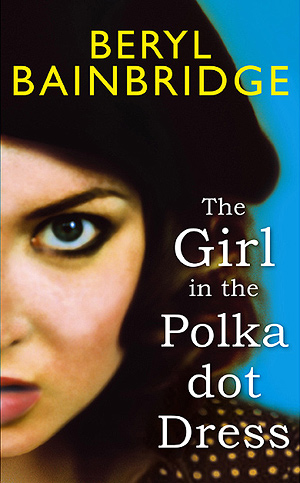
Beryl Bainbridge died in 2010. In her later years, hampered by poor health and failing eyesight, Bainbridge had attempted, and discarded, several book ideas. A surviving manuscript, published in May, was inspired by a diary the author had kept during a 1968 trip to America, according to The Telegraph.
The Girl in the Polka-Dot Dress focuses on the travels of an unlikely couple, ‘Washington Harold’, and a young woman, Rose, whom he had met previously in London. They hope to track down a mutual friend, the enigmatic Dr Wheeler, who is involved with Robert F. Kennedy’s presidential campaign.
Those familiar with the details of Kennedy’s assassination – outside a Los Angeles hotel, as he made a speech accepting the Democratic nomination – will know that Bainbridge’s title refers to a girl in a polka-dot dress, reported to have fled the scene.
Bainbridge’s style is, as always, uncanny – and Rose, with her steely wisdom hidden beneath apparent kookiness, recalls the author herself. The novel is a cross between a road movie and a political thriller, detailing the clash between jaded Europe and hopeful America, whose certainties will soon be shattered.
As with all unfinished novels, the reader may be feel cheated. But with sensitive editing, a writer’s presence can still be felt, even if the last pages remain unwritten.

 Tara Hanks
You must be logged in to post a comment.