Tags
Arthur Miller, Diana Dors, Italy, ITV, Jack Hylton, John F. Kennedy, Lookalikes, Marilyn Monroe, Milan, Opera, Rosalina Neri, The Misfits

Rosalina Neri, the singer and actress known as ‘la Marilyn Italiana’ (or ‘Marilina’) has died aged 96 after a short illness.
She was born in Arcisate in 1927, in the Varese region of Lombardy. Her father was a builder, and her mother a housewife. She began singing at the age of five in the Oratory of the Blessed Virgin Mary, and then at the Sant’Ambrogio, a boarding school run by nuns.
Although Rosalina had hoped to go to university, her family couldn’t afford the fees. Instead, at eighteen she went to Paris to learn French, staying with an uncle who also worked in construction. “He came to pick me up with a truck full of bricks,” she told Corriere della Sera. “We stopped at a bistro and he let me taste the champagne. It was then that I heard Edith Piaf singing ‘La Vie en Rose’ on the radio. I was enchanted. And I decided to study opera singing.” She worked for a lacemaker to pay for her lessons.
Back in Italy, Rosalina took further instruction from the Italian soprano, Toti Dal Monte, in Venice. “I stayed there for two years,” she said. “But it was a life of sacrifice: I had no money and I almost always ate at her place. So I returned to Milan.”
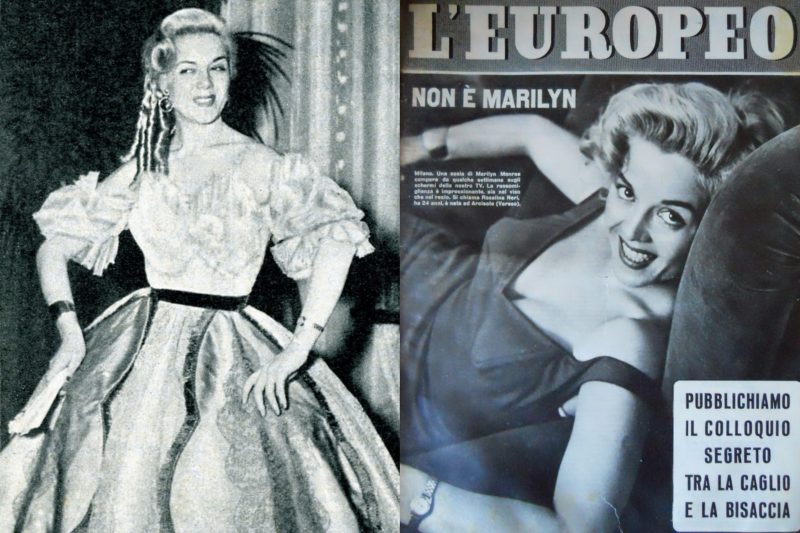
The screenwriter and director Marcello Marchesi cast Rosalina in a television variety series, Invito al Sorriso. “One day Marchesi told me: ‘Tomorrow we will make you blonde,’” she recalled. “We went on air on Thursday evening. The next day everyone said I was identical to Marilyn Monroe.” However, she was later fired for showing too much cleavage. “For the managers of the time I scandalised the viewers,” she told iO Donna in 2020. “According to them my necklines were too daring, but they were exaggerating.”
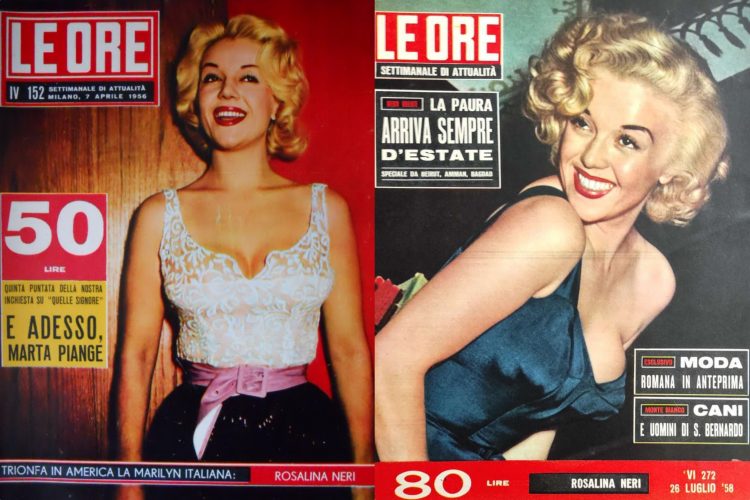
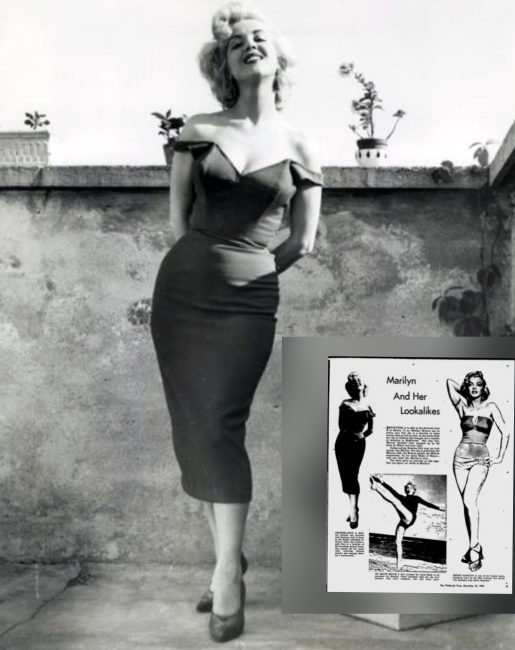
In June 1954 L’Europeo magazine published a cover story, headlined ‘IT’S NOT MARILYN.’ Rosalina was pictured wearing a low-cut red dress reminiscent of Marilyn’s ‘cutaway dress’ from Niagara (1953.) Further images from the same shoot with photographer Federico Patellani appeared in Le Ore magazine that August. In another series, Rosalina recreated photos of Marilyn posing for Philippe Halsman, published by the same magazine in 1953.

“Rosalina Neri is a girl who is much talked about today,” the article noted. “She is compared to Marilyn Monroe for her style and especially the way she moves. Rosalina has accepted this comparison, but has not made it her selling point. She is not interested in this resemblance. She is only Rosalina Neri from Arcisate. A little girl from a small and very beautiful village on the road from Varese to Ceresio. A girl who is not at all vain if as she passes by one stops to admire her.”
She came to London in 1955 to shoot a coffee commercial, and met actress Diana Dors, the ‘British Marilyn Monroe’ (although her fame preceded theirs.) “She was taller than me and she was beautiful,” Neri said. “I remember that I called my mother … She said to me: ‘Rosalina, put some cotton wool in your cleavage’. The next day I was on the front page of the Daily Mirror, not Dors … It was thanks to her that I met my great love at a party. I had rented a dress that resembled those worn by Monroe, but that was enough: it was love at first sight.”
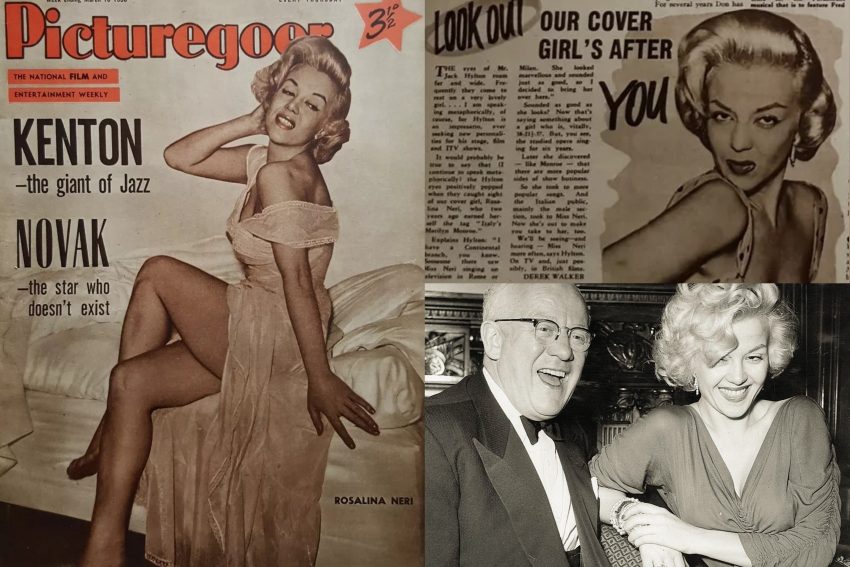
Jack Hylton was a bandleader and impresario, known as the ‘British King of Jazz.’ At 63, he was more than twice her age and had just been appointed as Advisor of Light Entertainment to Associated-Rediffusion (A-R), holder of the weekly London franchise to the recently established ITV network. At the same time, he set up a production company and would dominate the channel’s variety programming for several years.
“The greatest love of my life,” she said of Hylton. “We lived in London, at number 3 Savile Row, the same house where the famous Lady Hamilton, Admiral Nelson’s lover, lived years before. And where, in 1970, the Beatles played the concert on the roof … I lived there for almost ten years.”


With Claudio Villa in Living, Singing … What Harm Does It Do?
While Hylton groomed her for the small screen, Rosalina made her movie debut in I Pinguini Ci Guardano (‘The Penguins Look At Us’), a 1956 musical comedy set in a zoo, with the behaviour of its human visitors drolly observed by the animal occupants. She won top billing in her next film, The Happy Lookalikes, alongside Anna Maria Ghiani and Scilla Gabel as village beauties mistaken for movie stars; the poster art showed Neri in a Monroesque pose, with her co-stars resembling Gina Lollobrigida and Sophia Loren. In Living, Singing … What Harm Does It Do? (1957), her leading man was popular singer Claudio Villa.
Rosalina also recorded three four-track EPs with conductor Gino Mazzocchi and his orchestra, released in Italy and Portugal, including a cover of ‘Que Sera Sera (Whatever Will Be Will Be)’, a song made famous by Doris Day.

She soon became a familiar face on Jack Hylton’s Monday Show among members of the Crazy Gang, a comedy troupe. She duetted with Bud Flanagan on a medley of songs he had recorded with musical partner Chesney Allen, and performed solo numbers with a Latin flavour. She also appeared on The Music Box, joining Terry-Thomas for a sketch in which the comic actor played a Scottish Toulouse Lautrec.
When some viewers complained about Rosalina’s broken English, she took lessons with veteran actress Evelyn Hall. She earned rare praise for ‘Hotel Riviera,’ a Monday Show episode in which she played a cabaret star who meets a host of amusing characters while staying in a continental hotel. Among the guest stars was Alexander D’Arcy, the Egyptian-born actor who co-starred with Monroe in How to Marry a Millionaire (1953.)
“There was only one redeeming feature about this programme which Associated-Rediffusion offered its viewers and that was the presence of Rosalina Neri,” The Stage noted. “This lovely Italian star is really wasted in this banal effort. The comedy relief is only a relief when it stops and Rosalina has a chance to sing.”

At the ‘Hotel Riviera’ on ITV’s Monday Show
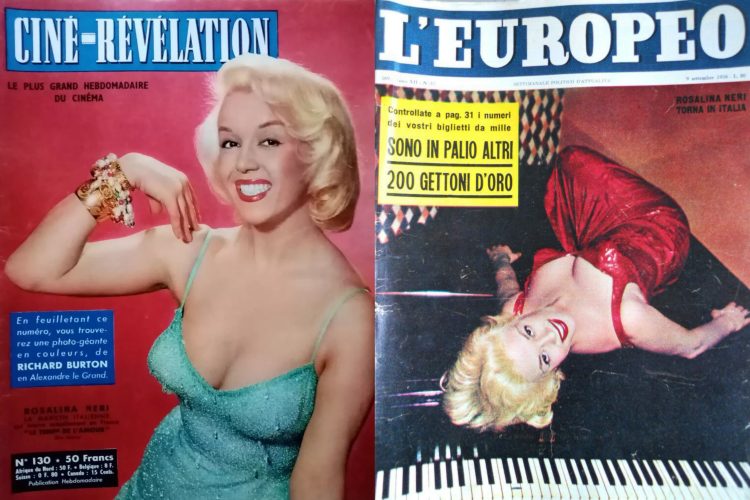
In 1958, she played supporting roles in My Rascal Father, a Franco-Italian comedy, and Valeria Ragazza Poco Seria, her last film credit for many years. “In the ‘50s if you wanted to make movies you had to be in Rome,” she recalled. “And I never liked it. Also, I loved being in the theatre more. I was good friends with some directors though. Fellini, for example, but he never offered me a role even though I fitted into his aesthetic canon.”
“Glamour and sex – why, one gets tired of them,” she told reporters as she left London to study with the tenor, Dino Borgioli. Her relationship with Hylton went on, as he showered her with gifts including an open-top Alfa Romeo sports car, £50,000 of jewellery and lavish holidays at his villa in the south of France.
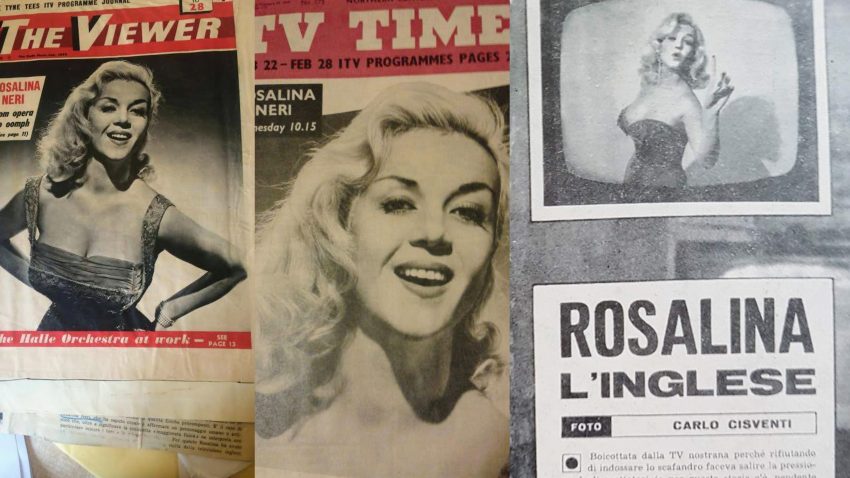
She made a comeback in 1959 with The Rosalina Neri Show, which ran for nine episodes on ITV. By then, however, a backlash against Hylton’s lowbrow fare was underway, and one critic likened Neri to “a combination of Sabrina, the young Marlene Dietrich and Marilyn Monroe – but grown to nightmare proportions.”
“Such was her handling of one number last night that it bordered on comedy,” the Liverpool Echo noted, dismissing Rosalina as “lovely to look at but rather ludicrous to listen to.” The series has come to be viewed, according to Hylton’s biographer Pete Faint, “as the nadir of his entire career.” And yet it was Neri who bore the brunt of critical scorn.
On the opening night of the Gala Week of Italian Opera at London’s Adelphi Theatre in December 1959, she sang the part of Adina in Donizetti’s L’Elisir D’Amore with what one critic described as “a pipsqueak of a voice, often off-key.” “Her tiny voice sounded like someone singing through a pea-shooter,” another said.
“Her habit of unconsciously tracing, with her left arm, the shape of the phrases she was trying to sing prompted sniggers,” The Times reported, “and by the third act the humiliated soprano was given the proverbial raspberry. Her understudy took over for the rest of the run.” She was compared to the young mistress of a newspaper magnate portrayed in Orson Welles’ Citizen Kane, who is booed offstage after making her debut in the opera house he built for her.
Nonetheless, Rosalina remained at Hylton’s side, and would claim to have met the Hollywood star to whom she was so often compared. “Jack had taken me with him to New York to see new shows to bring to England,” she told Famiglia Cristiana in 2016. “After a night out, I saw [MM] at the entrance to a nightclub: she was drunk, she could barely stand, she was dressed in black and she had a ladder on her stocking. And yet she was so pretty, poor star. Surely, even in those conditions, she was much more beautiful than me.”
Pittsburgh Press, 1954
“She looked at me and with her sweet voice exclaimed: ‘Oh my God! What’s your name?’ I answered that my name was Rosalina and she then told me that she would speak to her husband [Arthur Miller] who was writing his next film: her character would be called the same as me.” Monroe played Roslyn Tabor in The Misfits, her cinematic swansong. Rosalina’s story notwithstanding, it’s generally thought the name was chosen for its similarity to Marilyn’s.
She also met another legendary figure during this period – President John F. Kennedy – over dinner at New York’s famous 21 Club. “I was there because Jack [Hylton] had been invited,” she explained. “I was the only woman that evening. [Kennedy] and I ate the same dish: frogs Provençal. He was very kind to me and surely noticed my resemblance to Marilyn. But he didn’t say anything. He probably knew that Jack was a very jealous man …”
Undeterred by her failed West End appearance, Rosalina returned to the stage in 1961, as Mimi in a Ghent production of Giacomo Puccini’s La Bohème. To avoid more bad publicity, she was billed under the pseudonym of Angela Baldi and quickly won over the Welsh audience. Reverting to her own name, she received a standing ovation from a 9,000-strong audience for her recital of operatic arias at the International Eisteddfod at Llangollen in 1962.

With Gianni Jaia in La Bohème
She was relaxing at Hylton’s holiday home in Antibes when the news of Monroe’s death was announced. “I wasn’t expecting it,” she said. “Marilyn seemed like a woman full of life … I don’t think she would have agreed to grow old in public: she had to remain beautiful for everyone, always.”
“In the entertainment world everyone said: ‘This poor idiot, she thinks she’s Marilyn Monroe,’” Neri remembered. “They didn’t want me anymore. But I didn’t give up … Everyone saw me as an imitation of Marilyn while I was much more. At the time the association ‘vamp equals goose’ was the order of the day … That’s how men were then, they wanted women beautiful but stupid to manipulate as they pleased.”

A further shock came in 1963. While visiting her mother, Rosalina was notified by Hylton’s secretary that he had secretly married Beverley Prowse, an Australian model and beauty queen, in Geneva. At 29, she was even younger than Neri, but the affair apparently resumed. Rosalina’s name briefly resurfaced in the British press after Hylton’s death in 1965. By then she was pregnant with her daughter Angela (or ‘Coco.’)
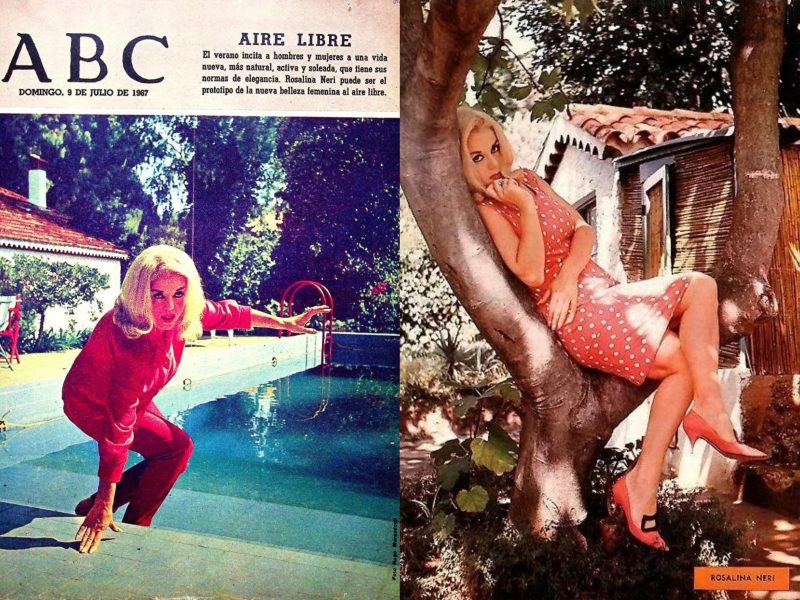
“Unfortunately, after ten years the love ended and I returned to Italy, where no one wanted me anymore,” she recalled. “I sang at night at the Derby to support my daughter.” Under the tutelage of director Filippo Crivelli she gave recitals at the Teatro Gerolamo, rented at her own expense. He then cast her in a 1977 revival of Benjamin Britten’s The Beggar’s Opera at the Piccola Scala theatre. Peter Ustinov directed her in his 1982 production of Igor Stravinsky’s The Flood, and she also appeared in The Tales of Hoffmann, Faust, and Madame Butterfly.
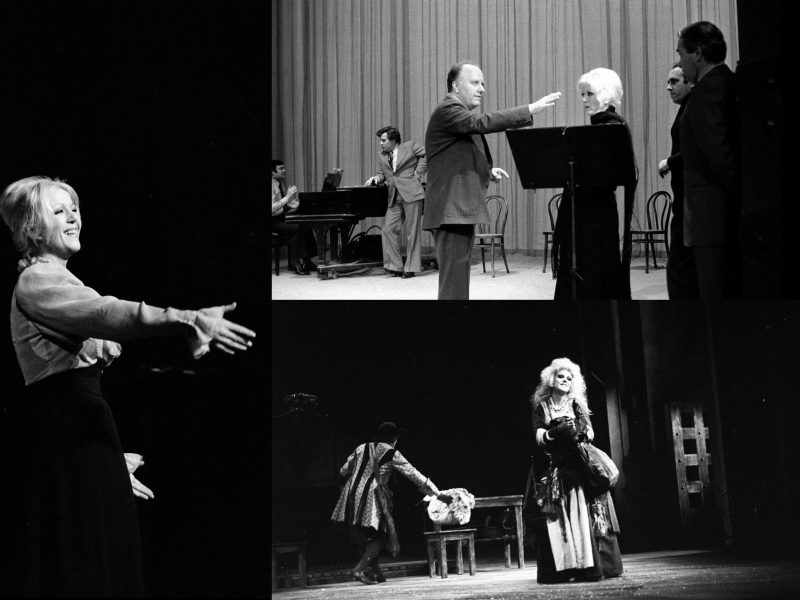
With director Filippo Crivelli at La Scala
Another inspired collaboration began in 1984 when Giorgio Strehler directed Neri in his production of La Grande Magia, the first of many non-musical parts. “‘I’ll hire you because you haven’t studied acting,’ he told me. I thought I’d only do that show and I stayed at the Piccolo for twelve years.” She enjoyed dining with Crivelli, Strehler, and many others at her apartment in Milan. “I like cooking for friends, and I’m a specialist in pâté de foie gras,” she said. “I learned to prepare it from a chef at Chez Maxim when, very young, I spent some time in Paris. And no one can beat me at that.”
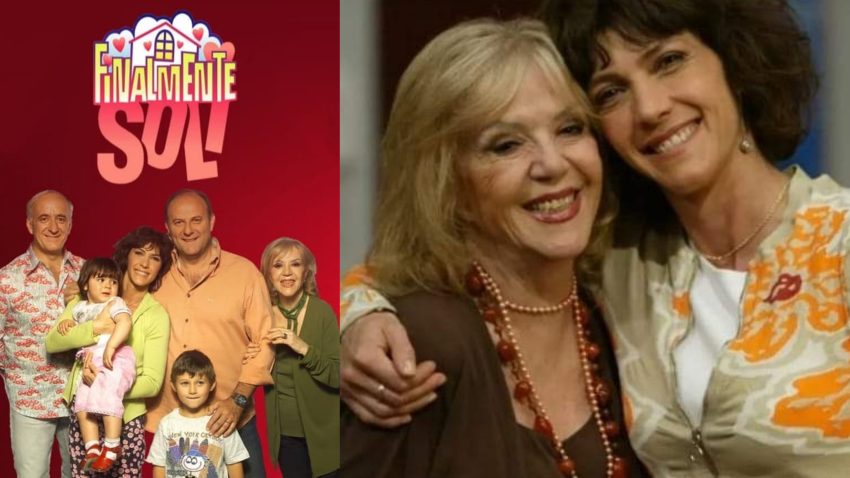
After her reappearance in an all-star TV miniseries based on Alessandro Manzoni’s epic novel The Betrothed in 1989, Rosalina played further supporting roles in films like Faccione (1991), Three Men and a Leg (1997), I Volontari (1998), and All the Moron’s Men (1999.) This led to a longer stint on the small screen as grandmother Wanda in the family sitcom, Finalemente Soli, and two spin-off TV movies. More film parts in Another Woman’s Face (2012) and It Takes a Great Body (2013) followed – but Neri never lost her love for the stage, performing in plays like Bertolt Brecht’s The Good Person of Szechwan and Federico Garcia Lorca’s Doña Rosita the Spinster.
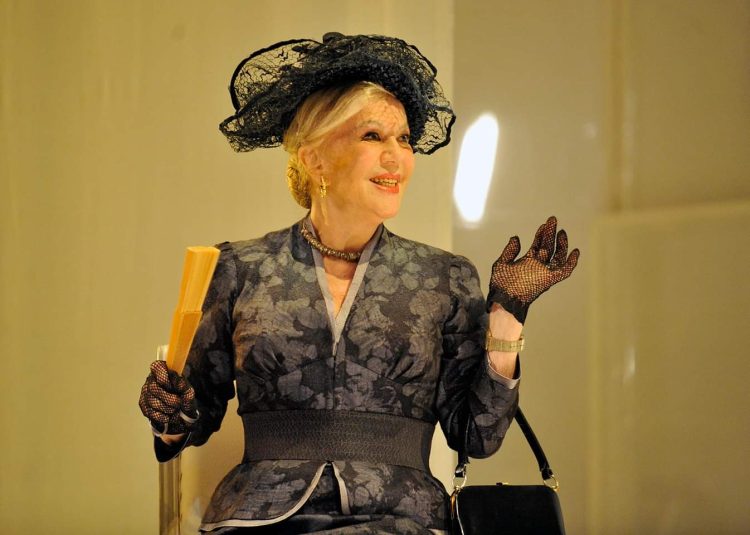
Doña Rosita the Spinster at the Piccolo Teatro Milan (2010)
“I think my life is a poem,” she reflected in a 2014 interview. “Everything that has happened to me and that has brought me this far has been wonderful, unique. Humiliations included … I have always liked men, let’s be clear, but like this I am fine, I do what I want, when and how I want. I am free. And then loneliness does not exist, you just have to look out the window to realise it. There is my Milan, which belongs to me even if I was not born there. And which I would not leave for anything in the world.”
Having initially hoped to play the great French actress Sarah Bernhardt in a one-woman show, in 2016 Rosalina returned to her original muse for ‘Je Me Fut’ – False Memories of a True Life, an assortment of anecdotes and tall tales accompanied by songs in English, French and Italian, including a rendition of Edith Piaf’s ‘Non, Je Ne Regrette Rien.’ Neri played an elderly homeless woman with a glamorous past, and based the character partly on Marilyn Monroe. (“Her only props were a red balloon and a toy Ferrari dragged along by a string, the real one having been sold many years ago,” noted The Telegraph.)

‘Je Me Fut‘, 2016
When asked how much beauty mattered to an actress, Neri responded: “Less than you might imagine. Franca Rame was considered the Italian Rita Hayworth, I was the Italian Marilyn Monroe. Fortunately for both of us, we proved to be something very different and more significant than simple lookalikes.”
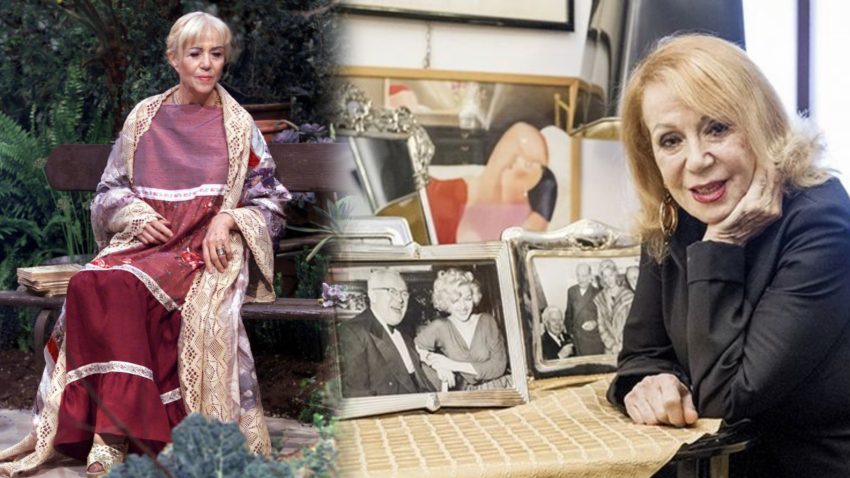
Among Rosalina’s cherished possessions was a coat with a red fox collar, a gift from her close friend, actress Valentina Cortese, who died in 2019. “I saw it on her and told her I liked it; she took it off and gave it to me,” she revealed. “Just like that, without thinking twice. I always wear it to the theatre and it gets more applause than me. Valentina [was] a wonderful woman, with an immense heart.”
Rosalina’s last screen role was in The Predators (2020), and in 2021, she starred alongside Anna Maria Guarnieri in a stage adaptation of filmmaker Frank Capra’s classic comedy, Arsenic and Old Lace. “Anna Maria and I cover each other’s memory gaps,” she told Il Bustese. “When one doesn’t remember the other suggests, and so far it’s worked.”

The Predators (2020) and Arsenic and Old Lace (2021)
Photographer Mario Chiodetti saw her as “the last remaining member of an extraordinary generation that gave so much to art and music … a woman of the people, generous and friendly, affectionate and seductive, but determined like few others, extremely jealous of her privacy … There are so many memories, like that time when I went to visit her in her parents’ house in Arcisate, or in Milan … She opened the door to me fresh from the hairdresser, perfectly made up with one of her black dresses, she looked like a silent movie diva … The last time I spoke to her on the phone she was increasingly alone, her mentor Crivelli had died [in 2022], many friends and colleagues of a lifetime, but she was not discouraged. She continued to do what she had always done, go on stage and transform herself into a thousand Rosalinas … the voice no longer what it once was, but the grit and charm remained intact.”
Rosalina Neri died in Milan on June 5th, 2024, and is survived by her daughter and two granddaughters.

Then and now: photos by Federico Patellani and Mario Chiodetti
 Tara Hanks
You must be logged in to post a comment.