Tags
Bus Stop, Clash By Night, Don't Bother To Knock, Feminism, Frank Powolny, Gene Kornman, Gentlemen Prefer Blondes, Germany, Gloria Steinem, Italy, Joan Mellen, John F. Kennedy, Larry McMurtry, Marilyn Monroe, Netherlands, Nickolas Muray, Pyramid Illustrated History of the Movies, Ralph Schoenman, Richard Avedon, Sam Shaw, Sexism, Some Like It Hot, The Misfits, Turkey, Typecasting
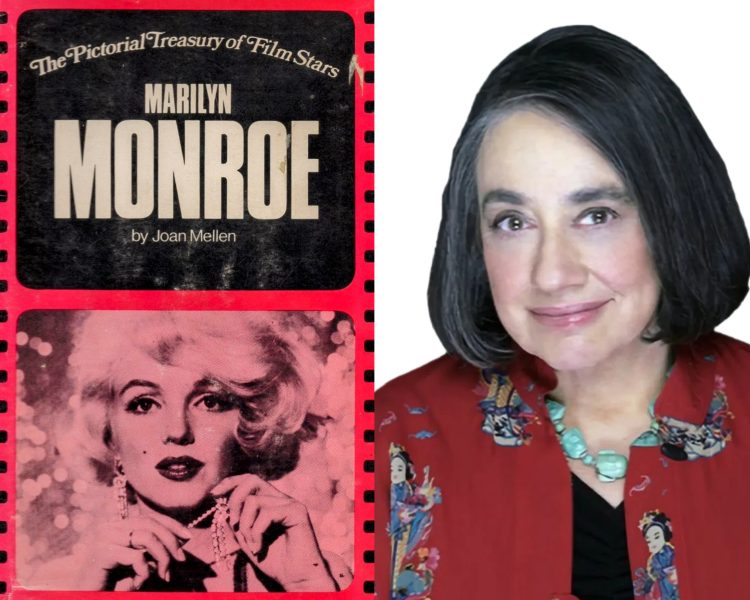
Joan Mellen – the academic whose many books included the first female-authored (and feminist) critical biography of Marilyn Monroe, with a primary focus on her film career – has died aged 83.
She was born Joan Spivack in the Bronx in 1941, the New York Times reports. Her father Louis was ‘a cigar-smoking, foul-mouthed lawyer’ and their relationship was never close. She graduated from Hunter College in 1962 – the year Monroe died – and later received her master’s and doctoral degrees in English from the City University of New York (CUNY.)
Her first marriage to James Mellen lasted just a year. In 1967 she joined Temple University in Philadelphia as a professor; and in 1968, she married Ralph Schoenman, a left-wing activist who worked as a secretary for the philosopher Bertrand Russell.
Mellen’s early books focused on film. Her first (and only) star monograph, Marilyn Monroe, was published alongside a study of The Battle of Algiers, a radical documentary far removed from Hollywood’s golden age. 1973 was a pivotal year in Monroe lore, dominated by Norman Mailer’s factoidal homage, Marilyn.
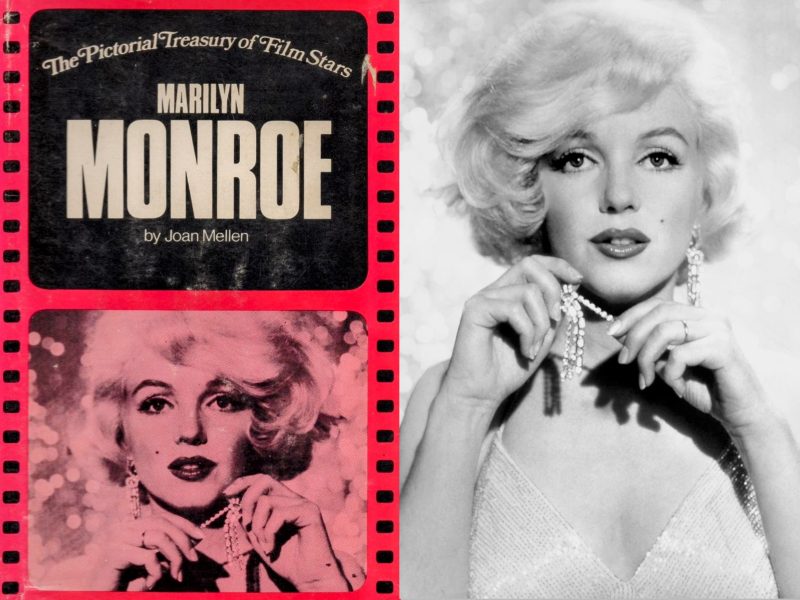
Marilyn was one of 60 actors featured in The Pictorial Treasury of Film Stars, a series from US publisher Galahad Books. A 1959 photograph by Richard Avedon was used for the hardback cover, but unfortunately, the image was horizontally flipped.
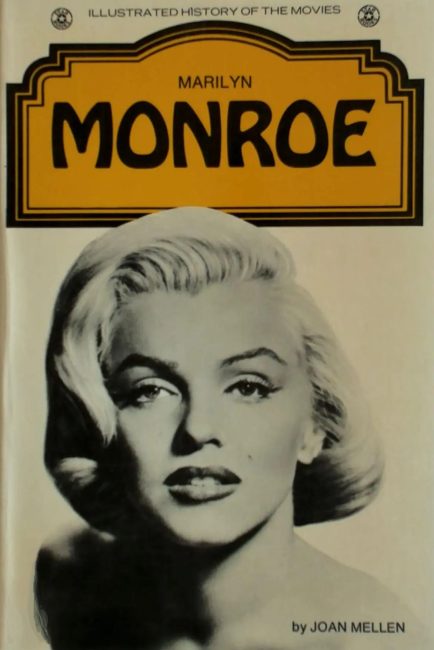
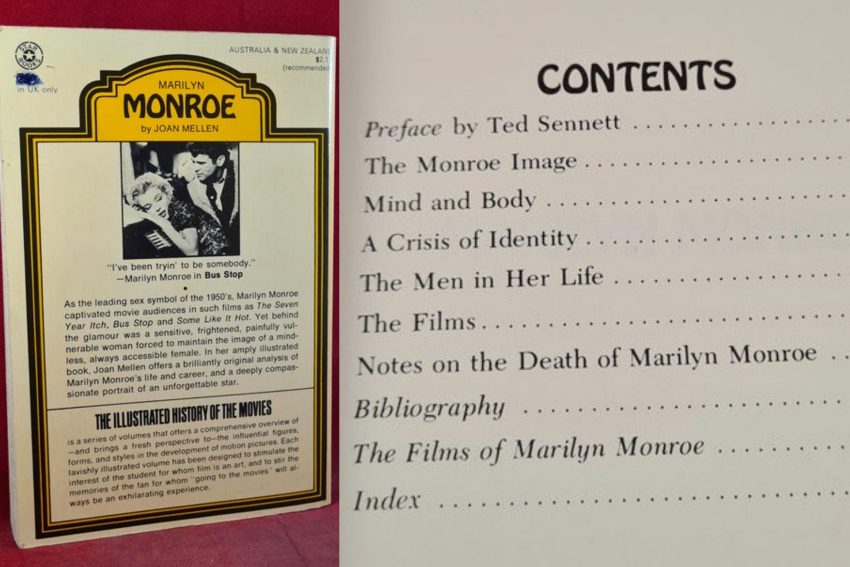
The UK paperback edition was published in the same year by Star Books as part of a duplicate series, Pyramid Illustrated History of the Movies. Over 144 pages, this compact volume examines Marilyn’s filmography, with 80 black-and-white photos (mostly film stills) accompanying Mellen’s text. It is dedicated to ‘Ralph, one of the few men who would have respected Marilyn Monroe.’
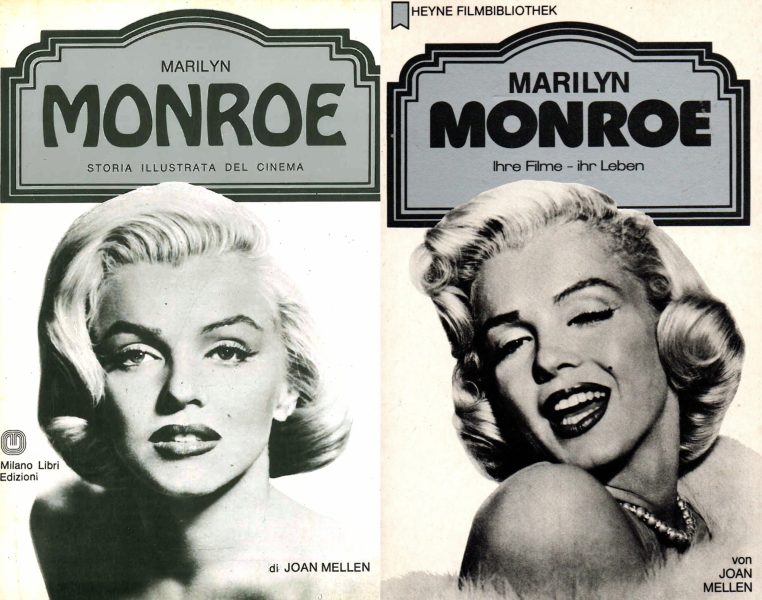
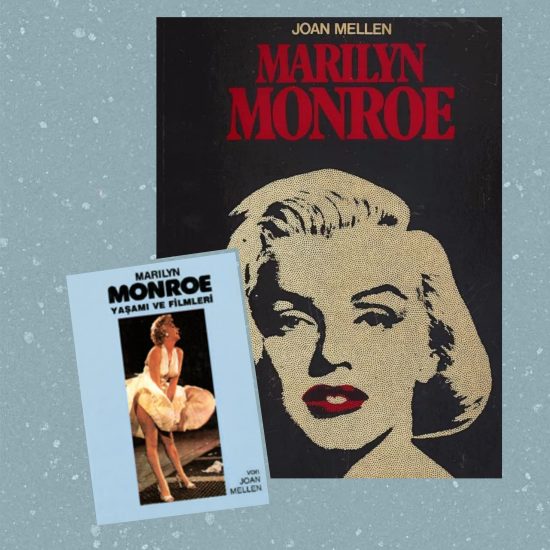
The same 1953 portrait was used for the Italian edition, while the German publisher chose another Frank Powolny photo from the period. The first image inspired artwork for the Dutch cover, while a Sam Shaw photo of the famous ‘skirt-blowing scene’ from The Seven Year Itch was appeared on the Turkish edition.
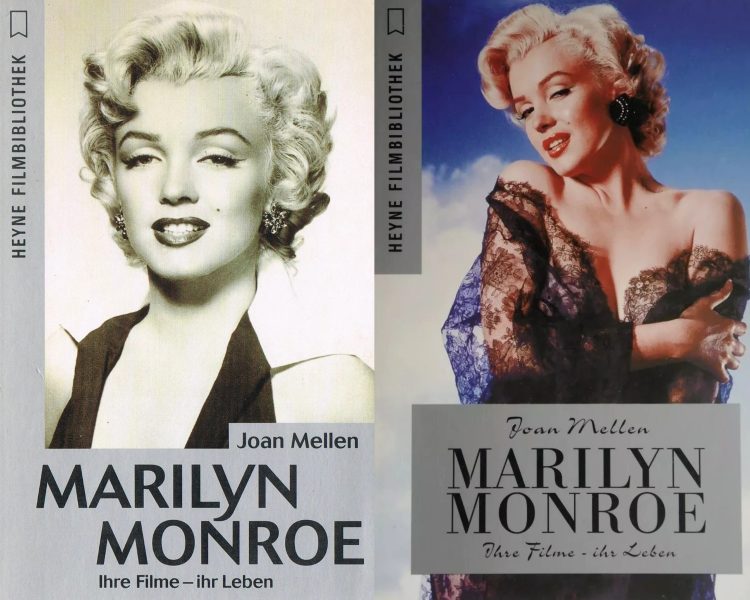
While never translated for French or Spanish readers, Mellen’s book was given two further reprints in Germany, featuring the famous Gene Kornman portrait that inspired Andy Warhol, and another 1952 photo by Nickolas Muray.
Mellen’s opinions of Monroe’s movies were often negative, pointing to her typecasting as a ‘dumb blonde.’ Mellen was scathing towards her most popular comedies, like Gentlemen Prefer Blondes, and dismissed her role in Some Like It Hot as an appendage to her male co-stars.
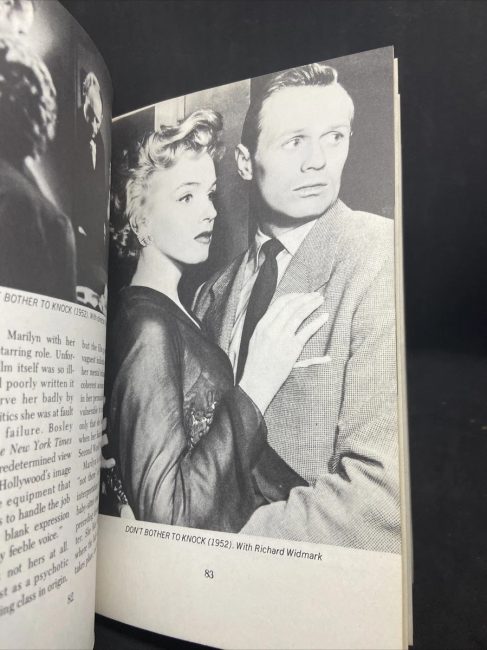
Her critique was aimed less at Marilyn herself than the patriarchal Hollywood culture, and she wrote positively of Monroe’s more dramatically oriented performances in Clash By Night, Don’t Bother to Knock, Bus Stop, and The Misfits. However, Marilyn didn’t escape Mellen’s ire entirely, as she was deemed complicit in her sexual exploitation.
It’s a harsh judgement but not without insight, and Mellen makes a compelling case even if you disagree. Another second-wave feminist, Gloria Steinem, expressed similar misgivings – albeit more gently – in her 1986 book, Marilyn: Norma Jeane, while a new generation of women critics have reclaimed Marilyn’s legacy as an actress who brought warmth and wit to often limiting roles.
‘I’ve been tryin’ to be somebody.’ Marilyn Monroe in Bus Stop
As the leading sex symbol of the 1950s, Marilyn Monroe captivated audiences in such films as The Seven Year Itch, Bus Stop and Some Like It Hot. Yet behind the glamour was a sensitive, frightened and painfully vulnerable woman forced to maintain the image of a mindless, always accessible female … Joan Mellen offers a brilliantly original analysis of Marilyn Monroe’s life and career, and a deeply compassionate portrait of an unforgettable star … designed to stimulate the interest of the student for whom film is an art, and to stir the memories of the fan for whom ‘going to the movies’ will always be an exhilarating experience.
In her third book, Women and Their Sexuality in the New Film (1974) – dedicated to her mother, Norma Spivack – Mellen explored a broad range of movie icons, from Mae West to Catherine Deneuve. “Mellen is an extremely well-informed critic, and she is neither politically nor cinematically naïve,” the novelist Larry McMurtry wrote in his review for the Washington Post, adding that it was “easily the best of the several recent books about the treatment of women in films.”
She went on to write Voices From the Japanese Cinema (1975), and Japan Through Its Cinema (1976); The World of Luis Buñuel, and Big Bad Wolves: Masculinity in the American Film (1977); and in later years, studies of Modern Times, Seven Samurai, and In the Realm of the Senses (for the BFI Film Classics series.)
Mellen and her husband divorced in 1981, but remained close friends until his death in 2023. She wrote biographies of novelist Kay Boyle, and the partnership of playwright Lillian Hellman and crime fiction writer Dashiell Hammett, and a study of One Hundred Years of Solitude, the ‘literary masterpiece’ of Colombian author Gabriel García Márquez.
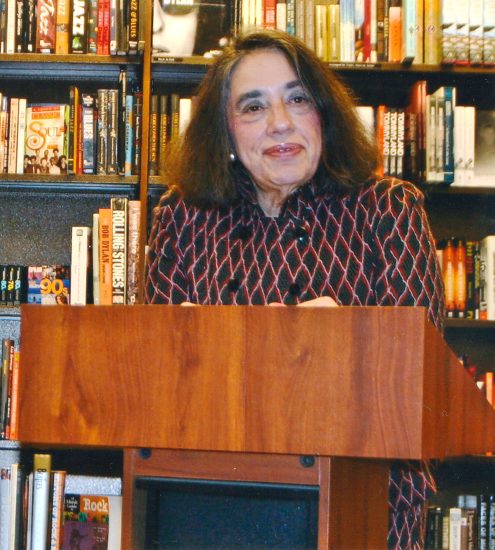
Joan published a novel, Natural Tendencies, and even branched out into sports writing with her biography of basketball coach Bob Knight. She wrote several books related to the assassination of John F. Kennedy, and although she believed that his alleged killer was framed by CIA operatives and said the official report was ‘bunk’, she wasn’t considered a conspiracy theorist among Kennedy historians.
“She was a real scholar and a formidable one,” the investigative journalist Jefferson Morley has commented. “She brought a different way of looking at things. Sometimes she attacked you. But once you got to know Joan, you realised that’s just how she was. She did that to a lot of people who were her good friends.”
Her final book, Sherlock Being Catfished (2024), was a memoir detailing her experience of being the victim of a Facebook romance scam. “My life’s work as a nonfiction writer involved intrepid investigation and dogged research,” she wrote. “It might have saved me. But it didn’t.”
Joan Mellen died at her home in Pennington, New Jersey on June 30, 2025.
 Tara Hanks
You must be logged in to post a comment.