Tags
Biography, Dr Ralph Greenson, Frank Sinatra, Gladys Monroe, Ida Bolender, J. Randy Taraborrelli, John F. Kennedy, Marilyn Monroe, Mental Illness, Norma Jeane, Robert Kennedy
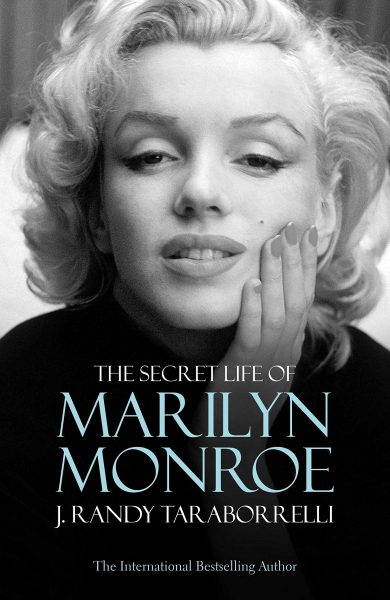
J. Randy Taraborrelli is the leading celebrity biographer of our time. His subjects include contemporary stars like Michael Jackson and Madonna, and he has produced a string of bestsellers. Taraborrelli’s style is best described as gossip journalism – tabloid-style, perhaps, but widely read. Having published books on Frank Sinatra and the Kennedys, it was perhaps inevitable that Taraborrelli would turn his attentions to Marilyn Monroe, who knew them all. But Monroe represents a unique challenge to biographers because she has been written about extensively in the 47 years since her death, more than any other actress. Furthermore, accounts of her life and character vary widely and it is difficult to find a consensus on even the most basic facts.
The Secret Life Of Marilyn Monroe deals primarily with two subjects: firstly, Marilyn’s childhood and the women who cared for her; and secondly, a re-examination of Marilyn’s mental illness towards the end of her life, suggesting her depression was more severe than previously disclosed. Of course, Taraborrelli’s focus on these topics in particular means that others are overlooked – Monroe’s work, which was her passion, is not central to this book, and her close friendships with people like Norman and Hedda Rosten are barely mentioned. Another problem with Taraborrelli’s narrative is his tendency to ‘reconstruct’ events, which makes the reading experience a compelling one, but ultimately leaves the reader wondering how much is reportage, and how much is invention.
Taraborelli’s material on Ida Bolender is particularly interesting because she has generally been dismissed as a dour religious zealot. But Ida was Norma Jeane’s foster mother for the first seven years of her life, the longest time she spent with anyone. Taraborrelli also focuses on Marilyn’s biological mother, Gladys Monroe Baker Eley, in later times as well. Marilyn had a tendency to reminisce about her childhood in only the bleakest terms, which is perhaps understandable – but she rarely spoke of the love she had received from women like Ida and Grace Goddard.
From the earliest days of Marilyn’s career, when she worked as a model, she regularly set aside money to help towards Gladys’s care. In 1953, Gladys moved into California’s Rock Haven Sanatorium where she would live for the next twenty years. Her living expenses were paid by Marilyn, who would also create a trust fund for her mother in her will. Over the years Gladys wrote to her daughter frequently, and though she did not always respond, Marilyn kept these letters among her possessions.
The Secret Life Of Marilyn Monroe is a sad, shocking story, but not entirely grim. Using anecdotes gleaned from Marilyn’s friends and associates, Taraborrelli reveals a woman as courageous as she was fragile. Determined to escape her mother’s fate, she embarked on daily sessions with a psychiatrist, and studied method acting, using past experiences to evoke whatever feelings a dramatic role required of her. Many of her circle felt that this made her too introspective, and broke down the coping mechanisms that had brought her so far. Additionally, she became dependent on prescribed drugs to ease her insomnia, anxiety, and severe menstrual pain. By her late twenties, she was already an addict.
Dr Ralph Greenson, Marilyn’s psychiatrist from 1960-62, believed she was suffering from borderline paranoid schizophrenia. Other commentators have suggested she might now be considered Bi-Polar, or Manic Depressive. But Marilyn’s worries were not completely unfounded. Although the chapters on her childhood are expansive, Taraborrelli fails to mention the rumoured sexual assault on the eight year-old Norma Jeane by a lodger in her mother’s house. Then in 1947, she was allegedly attacked by a policeman in her apartment. Taraborrelli suggests this was fantasy, but it was reported in a local newspaper. Moreover, since her marriage to Arthur Miller in 1956, she had been monitored by the FBI at the behest of J. Edgar Hoover.
While Dr Greenson’s diagnosis can, and should be questioned, Taraborrelli does not follow the conspiratorial line of a Kennedy affair and subsequent murder of Marilyn Monroe. He argues that there is no hard evidence of anything more than a weekend fling between Marilyn and President John F. Kennedy, and no proof whatsoever of a romance with Bobby. However, Taraborrelli does suggest that Marilyn may have become somewhat infatuated with JFK. He also writes about Marilyn’s friendship with Patricia Kennedy, then married to Peter Lawford.
While the beginning and end of Taraborrelli’s book are intriguing, the middle – dealing with Marilyn’s time in the spotlight – is a little weak. One chapter narrates a supposed affair between Marilyn and Frank Sinatra in 1954. The source of this story is Lena Pepitone, Marilyn’s former maid who described it in her much-derided memoir, Marilyn Monroe Confidential. Taraborrelli backs this story with quotes from Sinatra’s associates. Still, the timing seems a little off. In 1954, Marilyn’s marriage to Joe DiMaggio, then Sinatra’s friend, was in trouble. Shortly after the couple separated, Frank accompanied Joe on a stakeout, hoping to catch Marilyn with a lover. They broke into an innocent woman’s apartment, she reported it to the police and it was dubbed the ‘Wrong Door Raid’, leading to a court case and great embarrassment for all involved. Though not impossible, an affair between Sinatra and Monroe at this time seems a little implausible. However, just a few months later Marilyn would attend a Sinatra concert with friends, and six years later, she and Frank did indeed become lovers.
At nearly 600 pages, this is an attention-grabbing book. Unfortunately, there are quite a few errors along the way, spotted on first reading. Most will probably go unnoticed by casual buyers, but there is no excuse for such carelessness, especially on such an ambitious project. Furthermore, Taraborrelli’s list of sources is rather vague and contradictory. Fans of Monroe should bear these points in mind while reading this biography, but nonetheless it does make for a gripping read.
 Tara Hanks
Pingback: Mrs Hammond and the FBI | ES Updates
Pingback: The Secret Life of Marilyn Monroe | ES Updates
Pingback: Taraborrelli’s Marilyn Set for TV | ES Updates
Pingback: Susan Sarandon Cast as Gladys in ‘Secret Life’ | ES Updates
Pingback: ‘Secret Life of Marilyn’ Trailer Unveiled | ES Updates